 Service illustration · not a completed customer project
THE WORK, EXPLAINED
Start with the condition.
Understand the scope.
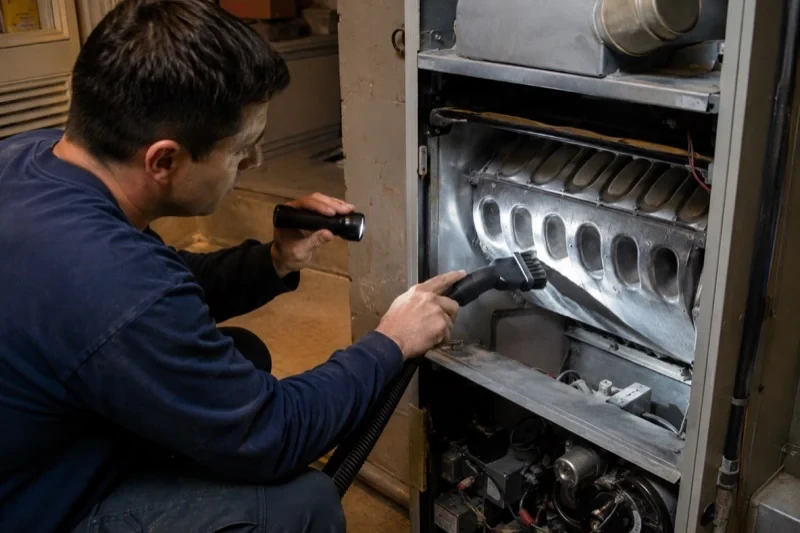
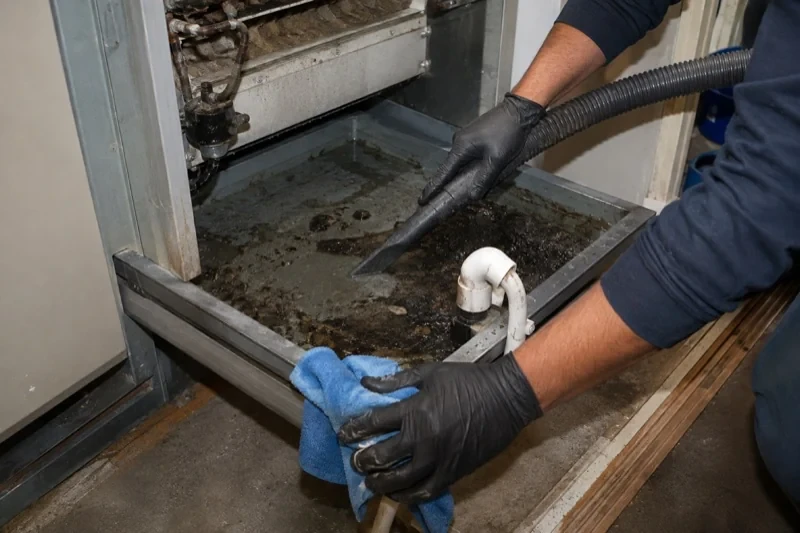
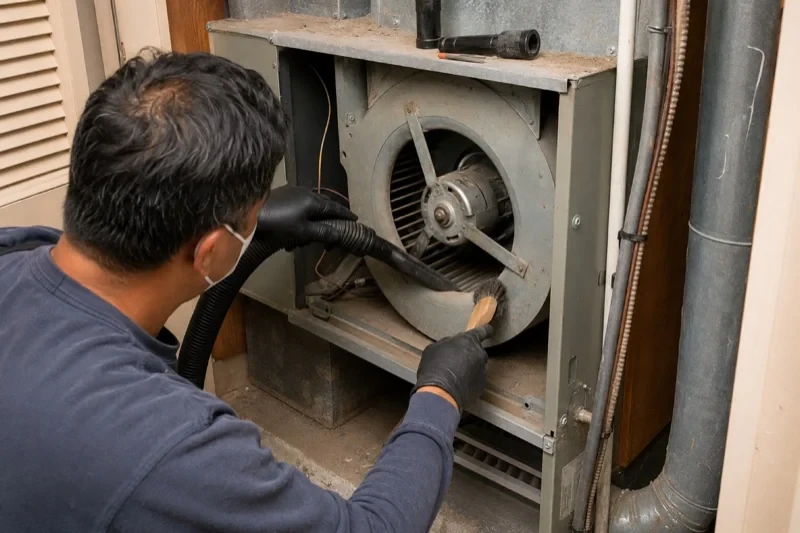
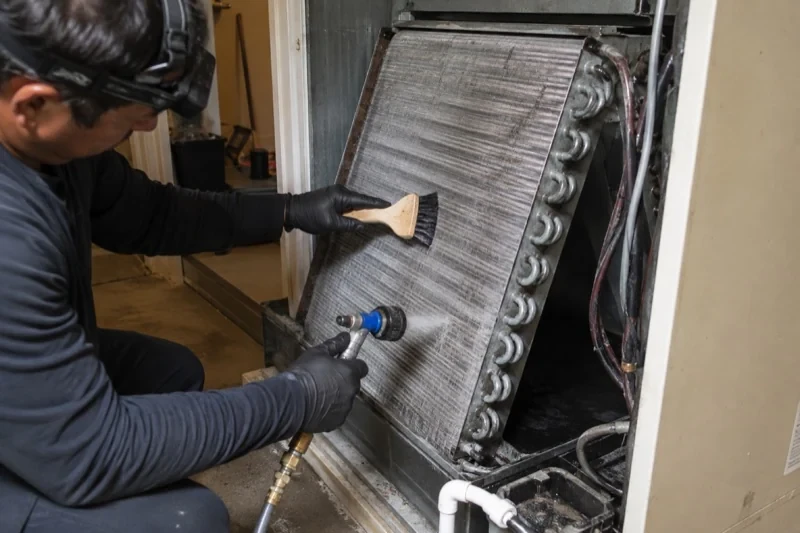
A coil-cleaning proposal needs to identify the coil, its observed condition and the access available. Ask the responsible HVAC provider which cleaning and condensate-management tasks are included and which findings require other work. Confirm how results and unresolved access or drainage issues will be documented.
What may be involved
- cooling coil
- drain pan
- access panel
- collection equipment
Ask the provider to distinguish existing parts to inspect, proposed replacements, and tools, materials or reports included in the service. Confirm the work and exclusions after assessment; this list does not mean that every item will be supplied or replaced.
LOCAL RESEARCH / Chinatown
Building history
The area rebuilt on its original site after 1906, and some buildings reused original brick; its historic fabric includes many early post-earthquake structures.
Source ↗Housing context
The Chinatown Area Plan describes predominantly low, small-scale buildings, with many buildings relatively short in depth because of the lot pattern. This describes the district’s built form, not the equipment or condition of an individual property.
Source ↗Local exposure
The City identifies Chinatown as comparatively sunny and sheltered from wind, rather than treating it as a typical fog-exposed district.
Source ↗Local context
The plan records more than 250 historically or architecturally important early post-earthquake buildings, so preservation-sensitive work is a realistic consideration.
Source ↗Area-wide context does not establish the condition of your property or equipment.
Before the visit
Building age and weather cannot establish duct contamination. The system itself needs to be inspected.